
Soft Words, Hard Truths: Euphemisms in Politics and Business
From downsizing to collateral damage, how the powerful dress up brutal realities in polite language.
The Corporate Word Wash: How Companies Say 'You're Fired'
For decades, the language of corporate layoffs has softened into a strange, almost clinical vocabulary. When a company announces downsizing, it usually means hundreds of people will lose their jobs — but the word itself sounds gentle, almost like tidying a desk drawer. Increasingly, executives prefer the colder, technical phrase workforce optimization, the trendier rightsizing, or the dry headcount reduction, all of which frame human beings as variables in a spreadsheet. After the announcements come the offboarding sessions and HR brochures describing a voluntary separation package as if leaving were an act of free will. Even merging departments is dressed up as restructuring, while quietly trimming the payroll is called streamlining — a word borrowed from rivers and efficiency manuals.
Military-Speak Goes Diplomatic: War by Other Names
Political and military language has long specialised in softening the violence it describes. Civilians killed by military action are rarely named; they become collateral damage, a chillingly mechanical phrase that turns deaths into an accounting entry. When troops strike their own side, the event is sanitised as friendly fire, as if the bullets were simply being polite. The most controversial example in recent memory is enhanced interrogation, a sanitised label for techniques that critics describe as torture. Even bombings are softened: an air strike becomes a 'surgical' action, and aggressive military operations are described as kinetic action, a phrase borrowed from physics that hides very physical consequences, before leaders speak of de-escalation to signal a quiet retreat.
Political Soft Soap: When Leaders Dodge the Truth
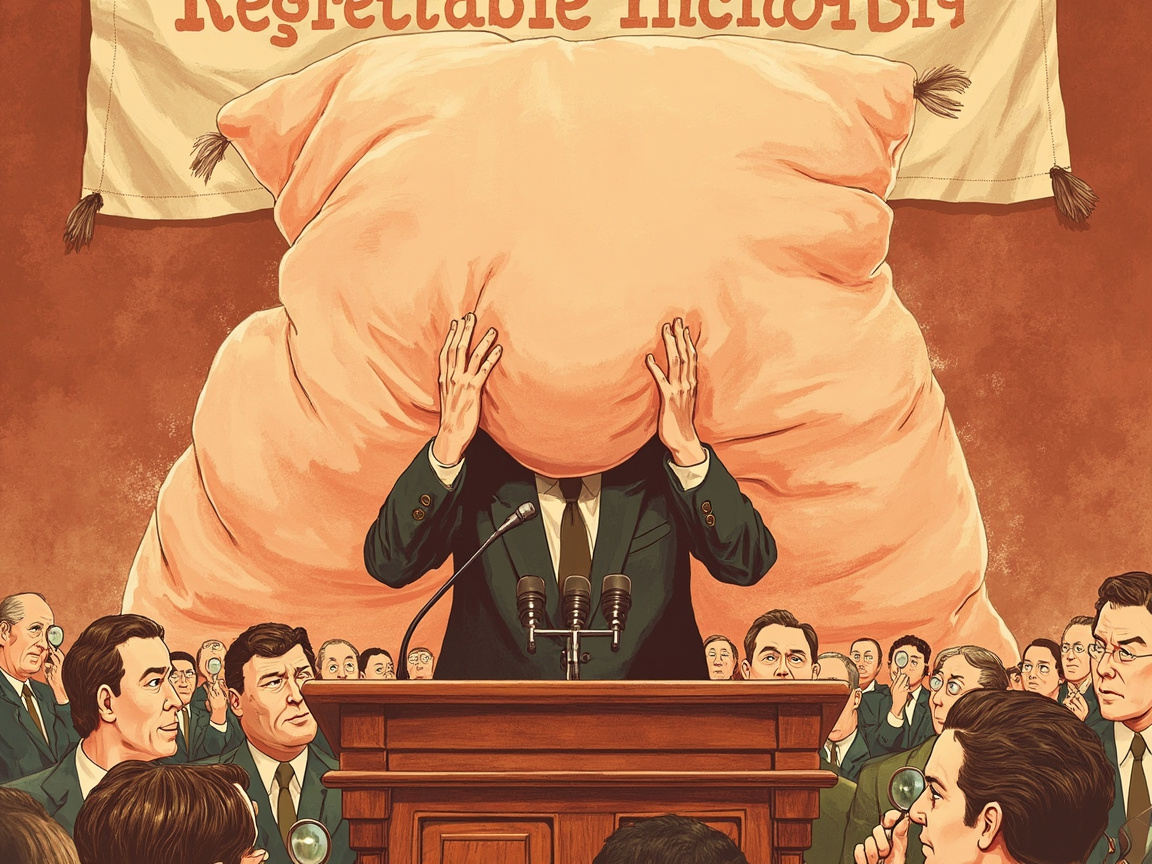
In the theatre of public life, euphemisms let politicians survive their own statements. A leaked memo, a failed policy, or a public scandal may be described as a regrettable incident — though 'regrettable' sounds like the mild disappointment of a missed train. When ministers do not want to admit what their policy really means, they use strategic ambiguity: language deliberately vague enough to satisfy everyone and commit to no one. Raising taxes becomes 'fiscal consolidation'; raising prices is rebranded as revenue enhancement, which sounds almost like a gift to the customer. The cumulative effect is a kind of public streamlining of accountability, where every sharp edge of meaning is sanded down until the original message becomes almost unrecognisable.
The Anatomy of a Euphemism: Why We Use Them
What do all these words have in common? A euphemism is, at heart, a linguistic bandage — it covers something painful, embarrassing, or simply too blunt to say. In the workplace, the softening is designed to protect both corporate image and worker dignity, which is why downsizing feels less violent than 'we are firing you.' In politics, the same mechanism protects leaders from having to own their actions, which is why ministers reach for strategic ambiguity rather than admit a clear mistake. The danger of overusing them is clear: when the language of public life becomes too cushioned, citizens struggle to identify what is actually happening, and accountability begins to dissolve. Understanding these soft words is therefore a form of literacy — a way of reading between the carefully polished lines.
Quiz
-
1According to the article, what is the main reason companies use softer terms like 'workforce optimization' or 'rightsizing'?
The article explains that corporate softening is designed to protect corporate image and worker dignity at the same time.
-
2In the article, the phrase 'collateral damage' is used to describe:
The article defines collateral damage as the unintended deaths or harm suffered by people who are not the intended target.
-
3Which term does the article use to describe deliberate vagueness by politicians?
The article presents 'strategic ambiguity' as language deliberately vague enough to satisfy everyone and commit to no one.
-
4What risk of euphemisms does the article highlight in its final section?
The article warns that when language becomes too cushioned, citizens struggle to identify what is actually happening, and accountability dissolves.
-
5According to the article, the word 'offboarding' is best described as:
The article defines offboarding as the process of formally ending an employee's time at a company, a softer word for dismissal.