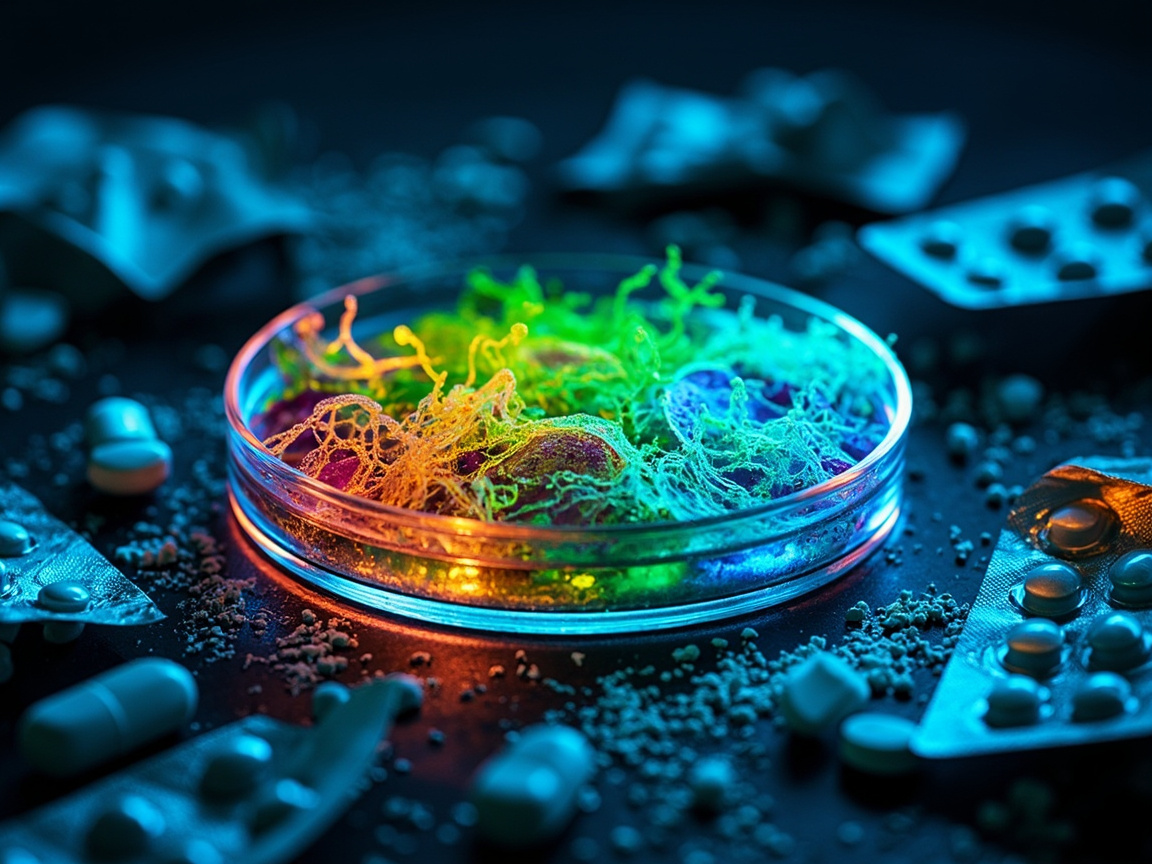
The Antibiotic Crisis: Medicine's Ticking Clock
As superbugs outpace new drugs, a silent pandemic threatens to undo a century of medical progress.
A Silent Pandemic Rises
Each year, more than a million people worldwide die from infections that common antibiotics can no longer cure. The World Health Organization has called antimicrobial resistance one of the greatest threats to global health, with mortality figures climbing steadily. Unlike COVID-19, this crisis builds slowly, almost invisibly, in hospitals, farms and communities. Yet experts warn that the death toll could reach ten million annually by 2050, surpassing even cancer in some projections.

The Biology of Resistance
At the heart of the problem is evolution. When bacteria are exposed to a drug, most die, but a few may mutate and survive. These survivors multiply, passing on their defences to the next generation. Over time, entire populations of dangerous pathogens become untouchable by the medicines doctors once relied on. The result is the rise of so-called superbugs, strains that resist nearly every treatment available.
Why the Drug Pipeline Has Dried Up
Developing a new antibiotic can take a decade and cost over a billion dollars, yet the pills are typically taken for only a week or two. For companies, the financial rewards rarely justify the scientific innovation involved. Major pharmaceutical firms have largely abandoned the field, and the global pipeline of new drugs has slowed to a trickle. Many scientists worry that medicine is quietly returning to a pre-antibiotic era, when a simple cut could turn deadly.
The Cost of Overuse
Much of the resistance we see today traces back to the overuse and misuse of these precious drugs. Antibiotics are routinely prescribed for viral colds, where they offer no benefit, and they are still fed to livestock to promote growth in many countries. In some regions, the medicines can be bought over the counter without any medical guidance. Each unnecessary dose gives bacteria another chance to adapt, gradually weakening the immune defences that modern society depends on.
A Cautious Optimism
Despite the gloomy headlines, researchers are exploring unusual solutions, from bacteria-killing viruses to AI-designed molecules inspired by ancient remedies. Some governments are now testing "pull" incentives, paying companies a subscription fee for access to new drugs rather than rewarding them by the pill. International treaties are also being negotiated to limit the agricultural use of antibiotics worldwide. If the world acts quickly and together, this pandemic of resistance can still be slowed before the clock runs out.
Quiz
-
1According to the article, what does the World Health Organization call one of the greatest threats to global health?
The article states that the WHO has called antimicrobial resistance one of the greatest threats to global health.
-
2How do superbugs develop according to the article?
The article explains that some bacteria mutate and survive when exposed to a drug, eventually creating resistant superbugs.
-
3Why have major pharmaceutical firms largely left antibiotic research?
The article notes that developing a new antibiotic is expensive and the drugs are taken briefly, so companies find it unprofitable.
-
4Which of the following is mentioned as a cause of antibiotic resistance?
The article states that antibiotics are routinely prescribed for viral colds, which gives bacteria more chances to adapt.
-
5What new approach are some governments trying to encourage new antibiotic development?
The article explains that some governments are testing "pull" incentives, paying companies a subscription rather than per pill.