
Quiz: Food Then and Now
From fermentation to factory farms — a food history quiz.
From Foraging to Farming
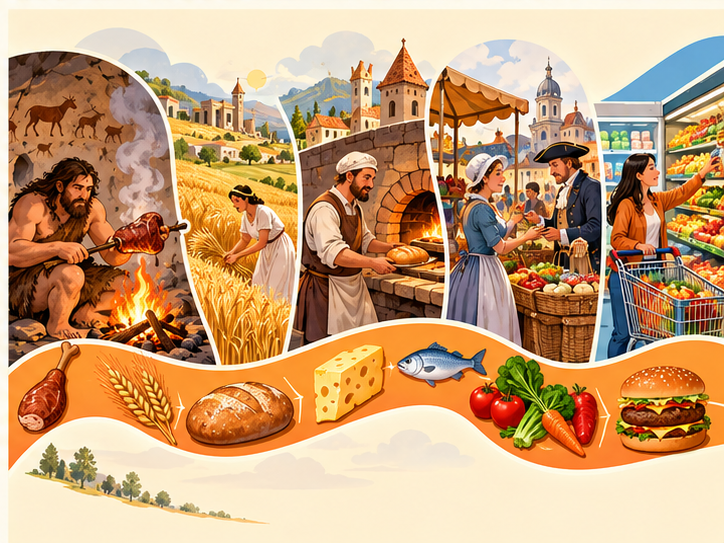
About ten thousand years ago, humans experienced one of the most important changes in history: the shift from hunting and gathering to settled agriculture. This Neolithic revolution meant people could control their food supply through the deliberate cultivation of crops such as wheat, rice, and maize. Along with farming came new techniques for keeping food safe to eat. Early societies discovered that fermentation could transform milk into cheese, grapes into wine, and grain into bread and beer. They also developed simple methods of preservation, including salting, drying, and smoking, which allowed communities to survive long winters and long journeys.
The Modern Plate
The industrialization of the nineteenth and twentieth centuries transformed the kitchen almost as much as the Neolithic revolution once did. Massive factory farms began producing cheap meat and dairy, while processed foods filled supermarket shelves. Traditional cuisine was often replaced by fast food, and worries about nutrition grew as diets became higher in sugar, salt, and fat. Today, many people are searching for a healthier balance. They are turning back to old tradition, supporting local farmers, and demanding food that is sustainable for both human health and the planet. The story of food, in other words, is still being written.
Quiz
-
1According to the passage, approximately when did humans begin the shift from hunting and gathering to agriculture?
The passage states that the shift to settled agriculture happened 'about ten thousand years ago' during the Neolithic revolution.
-
2Which of the following is NOT mentioned in the passage as a product of early fermentation?
The passage lists cheese, wine, bread, and beer as products of fermentation; plastic is not mentioned.
-
3According to the passage, the Industrial Revolution changed food production by:
The passage explains that industrialization led to massive factory farms and processed foods filling supermarket shelves.
-
4Which of these are mentioned in the passage as early methods of preservation?
The passage specifically names 'salting, drying, and smoking' as early preservation methods.
-
5What does the passage say about modern food concerns?
The passage notes that worries about nutrition are growing and that people are demanding more sustainable food choices.