The Last Glow: How Light Pollution Is Erasing the Night Sky
From satellite streaks to city skyglow, artificial light is pushing the stars out of view — but a global movement is pushing back.
A Sky in Retreat
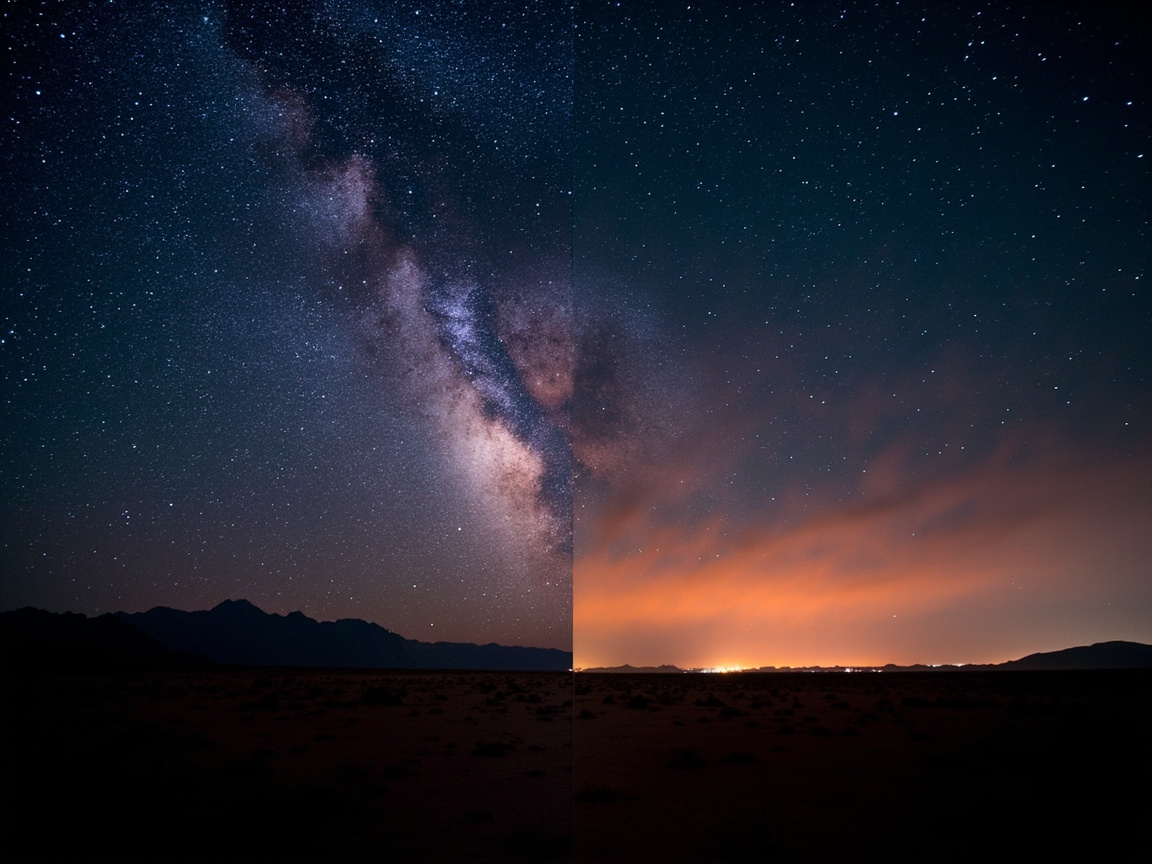
For most of human history, a star-filled sky was a universal experience. Today, more than 80% of the world's population lives under skies washed out by light pollution. The faint band of the Milky Way, once visible to nearly everyone, is now hidden from roughly a third of all humans, including 99% of those living in the United States and Europe. The trend is accelerating as urbanization spreads and artificial light grows both more efficient and more aggressive. Astronomers warn that within a single generation, the natural night sky may become a rare sight reserved for the lucky few.
The Satellite Swarm
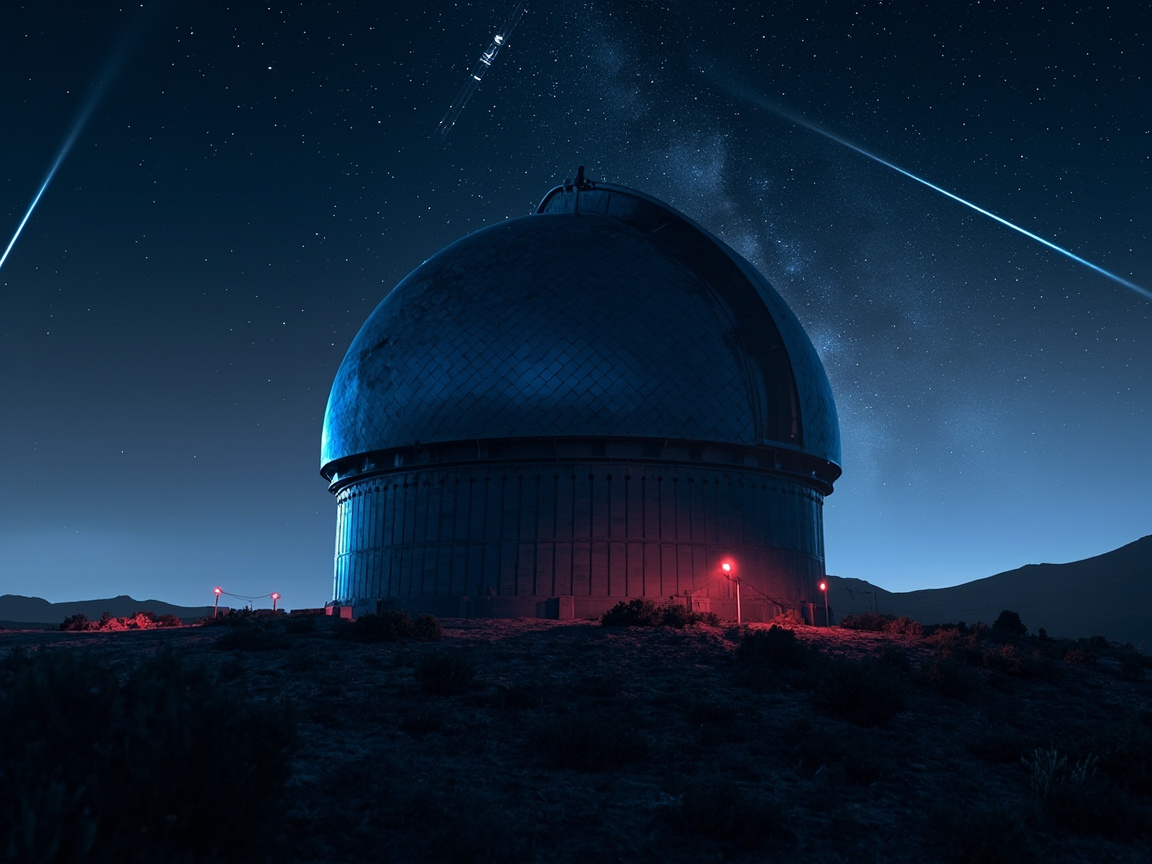
Adding to the problem is a new kind of intruder: vast constellations of communications satellites. Companies such as SpaceX, OneWeb and Amazon's Project Kuiper have launched thousands of spacecraft into low-Earth orbit to deliver global internet coverage. These satellites, highly luminous in the right conditions, reflect sunlight and leave bright streaks across long-exposure astronomical images. The Vera C. Rubin Observatory in Chile, designed to map the southern sky in extraordinary detail, has reported that up to 40% of its exposures are now contaminated by satellite trails. Critics argue the rapid rollout could exacerbate an already serious crisis for ground-based astronomy.
Cities That Never Sleep
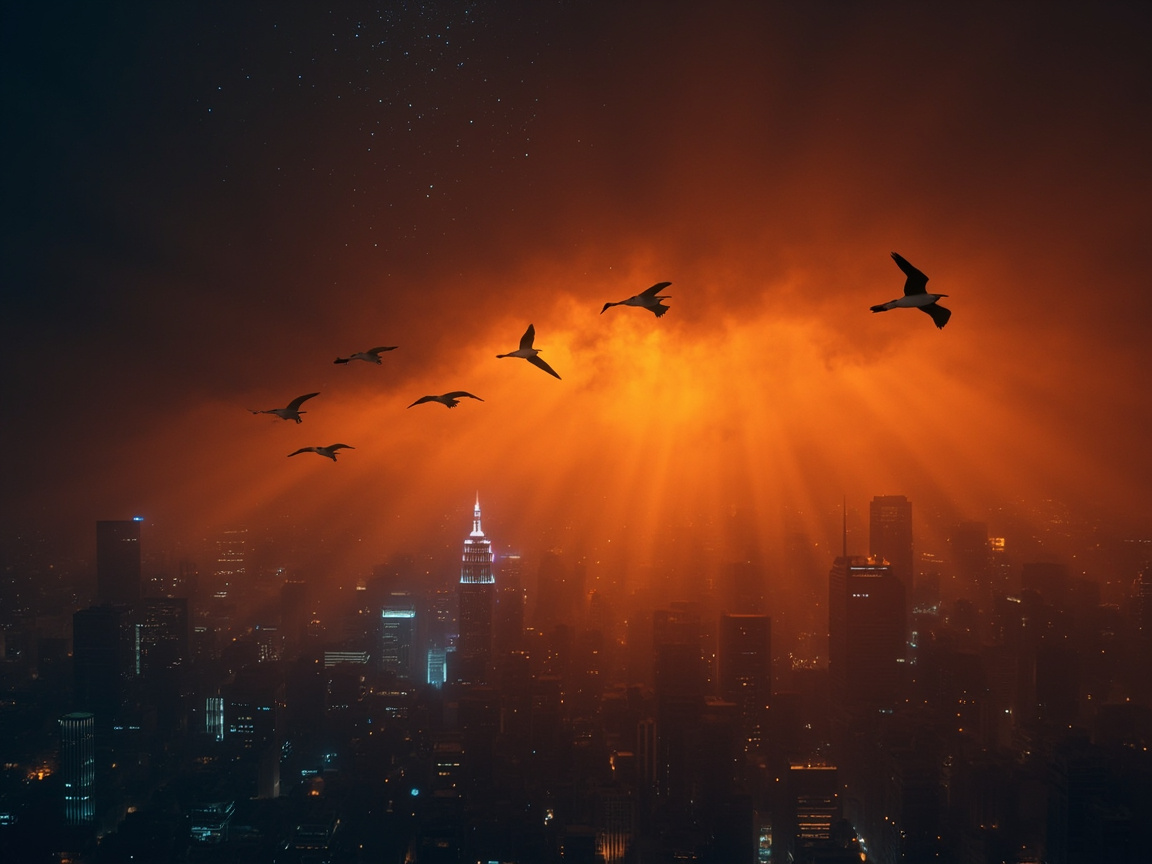
Urban areas remain the heart of the problem. A single brightly lit city can wash out the sky for hundreds of kilometers, creating a dome of glare known as skyglow. Modern LED lighting, while energy-efficient, often emits harsh blue wavelengths that scatter easily in the atmosphere and disturb the circadian rhythms of nocturnal wildlife. Birds, insects and sea turtles — many already under pressure from collapsing biodiversity — are now navigating an environment in which true night never really arrives. The result is a slow, almost invisible transformation of the world's most common ecosystem.
The Cost of a Glowing Sky
The consequences stretch far beyond astronomy. Artificial light at night has been linked to sleep disorders, depression and increased risks of certain cancers in humans. In the natural world, it interferes with the migration patterns of birds, the pollination habits of moths and the hunting behavior of owls. Scientists describe artificial light as a form of slow pollution — one that erases not just stars but entire behaviors woven into the fabric of life. The full effects, researchers caution, may take decades to fully understand, and some may already be irreversible.
Fighting Back
Yet the fight to protect the night is gathering momentum. The International Dark-Sky Association has certified more than 200 pristine dark-sky places around the world, from New Zealand's Aoraki Mackenzie reserve to the remote deserts of Namibia. Cities such as Flagstaff, Arizona, have passed strict lighting ordinances that require shielded, warm-colored fixtures. Advocacy groups are pressing the United Nations to recognize dark skies as part of the planetary heritage, alongside oceans and forests. Even some satellite operators now offer darker coatings and orbital adjustments to reduce their impact on the night.
A Window Still Open
Perhaps most striking is a growing sense of urgency. Schoolchildren in light-saturated cities are now being bused to remote observatory sites simply to see the Milky Way for the first time. Indigenous communities, whose traditional knowledge depends on careful reading of the night sky, are partnering with astronomers to document what is being lost. The night sky, like a vanishing species, can still be saved — but only if the glow is dimmed before the last star disappears from view.
Quiz
-
1According to the article, what proportion of the world's population lives under light-polluted skies?
The article states that more than 80% of the world's population lives under skies washed out by light pollution.
-
2What problem is the Vera C. Rubin Observatory reporting in its images?
The article explains that up to 40% of the observatory's exposures are contaminated by trails from communications satellites.
-
3Why are modern LED street lights considered particularly problematic?
The article notes that modern LEDs often emit harsh blue wavelengths that scatter easily and disturb nocturnal wildlife.
-
4How many dark-sky places has the International Dark-Sky Association certified?
The article reports that the International Dark-Sky Association has certified more than 200 dark-sky places worldwide.
-
5Why are schoolchildren being bused to remote observatory sites?
The article explains that children from light-saturated cities are bused to remote observatories simply to see the Milky Way for the first time.