
2025: A Quantum Leap for Science
The United Nations has named 2025 the International Year of Quantum Science and Technology, inviting the world to explore the strange rules that shape our universe.
A Year Dedicated to Discovery
The United Nations has officially declared 2025 as the International Year of Quantum Science and Technology. This declaration marks a global effort to celebrate one hundred years of advances in quantum physics. Around the world, governments, universities, and research centres will organise events, lectures, and exhibitions. The goal is simple: to help people understand how the strange rules of the quantum world shape the technology we use every day. From smartphones to medical scans, quantum science already influences modern life in ways most people never imagine.

What Exactly Is Quantum Science?
Quantum science is the study of matter and energy at the tiniest scales imaginable. At this microscopic level, atoms and particles behave in surprising ways that classical physics cannot explain. Scientists first developed quantum theory in the early twentieth century, when researchers like Max Planck and Albert Einstein began to make careful observation of strange natural effects. The theory has since become one of the most successful and fundamental frameworks in all of science. Without it, we would have no lasers, no computers, and no GPS satellites.
The Strange Rules of the Quantum World
Two ideas lie at the heart of quantum physics. The first is superposition, which means a particle can exist in many states at the same time until someone measures it. The second is entanglement, where two particles become mysteriously connected, even across vast distances. These ideas sound like science fiction, but scientists have tested them again and again in laboratories. They form the basis for technologies that may soon revolutionize the way we process information and communicate.
From Theory to Real Life
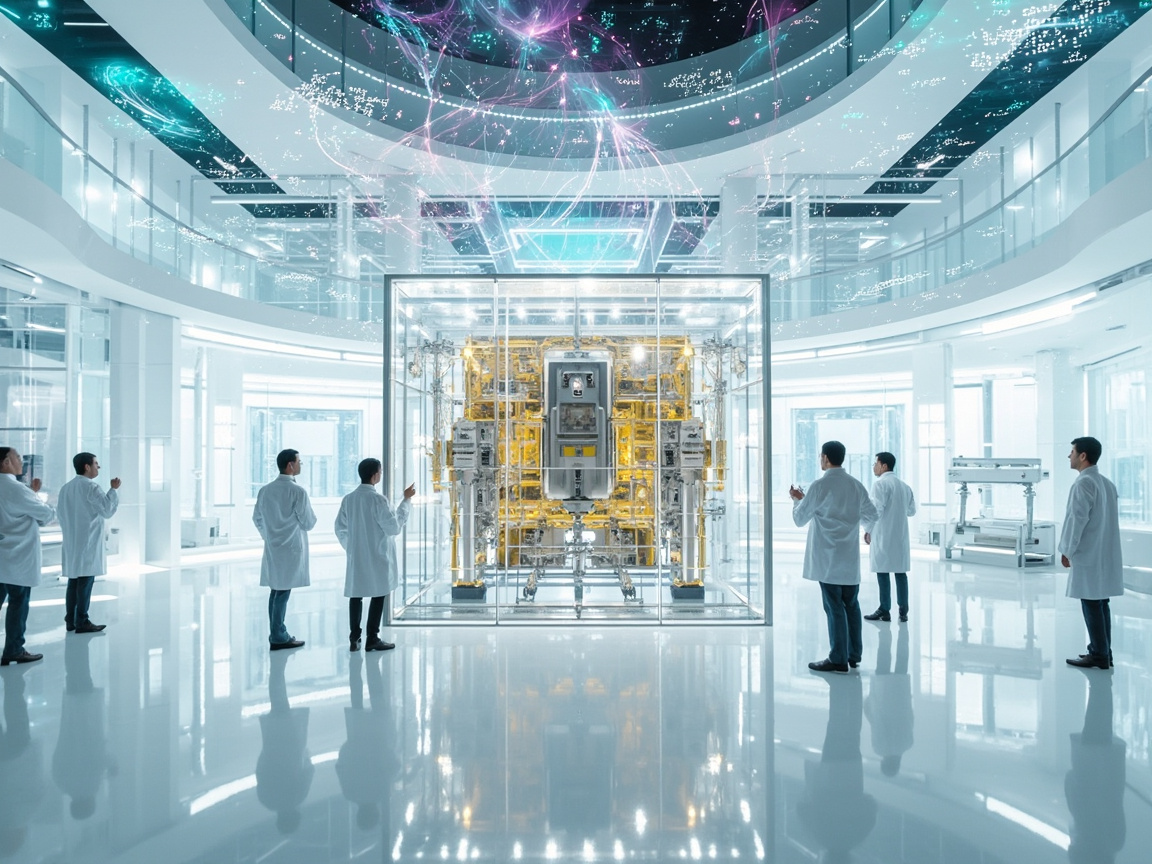
The most exciting promise of quantum science is computing. Quantum computers use the strange rules of quantum physics to solve problems that ordinary machines cannot handle. They could transform medicine, climate research, and artificial intelligence. Another major area is cryptography, the science of keeping information secret. Quantum systems can create codes that are nearly impossible to break, protecting everything from bank accounts to government messages. Researchers are also working on extremely high-precision sensors that can detect diseases earlier and help engineers build better materials.
Why the World Is Paying Attention
Quantum technology is no longer a topic only for physicists in laboratories. Governments are investing billions of dollars in breakthrough research and training new scientists. Businesses from small startups to large tech companies are racing to harness the power of quantum systems. The International Year of Quantum Science aims to bring these communities together. Through international collaboration, scientists hope to share knowledge, set ethical standards, and inspire young people to explore this fascinating field.
اختبر نفسك
-
1According to the article, what has the United Nations declared 2025 to be?
The article clearly states that 2025 has been declared the International Year of Quantum Science and Technology.
-
2What does the term "superposition" mean, as described in the article?
The article defines superposition as the idea that a particle can exist in many states at once until someone measures it.
-
3In the article, "entanglement" refers to:
The article explains that entanglement is when two particles become mysteriously connected, even across vast distances.
-
4Which of the following is NOT mentioned in the article as a possible application of quantum technology?
The article lists medicine, cryptography, and climate research as areas quantum technology could transform, but does not mention cooking recipes.
-
5What is the main purpose of the International Year of Quantum Science?
The article states that the year is meant to celebrate advances in quantum physics and help people understand how it shapes technology.