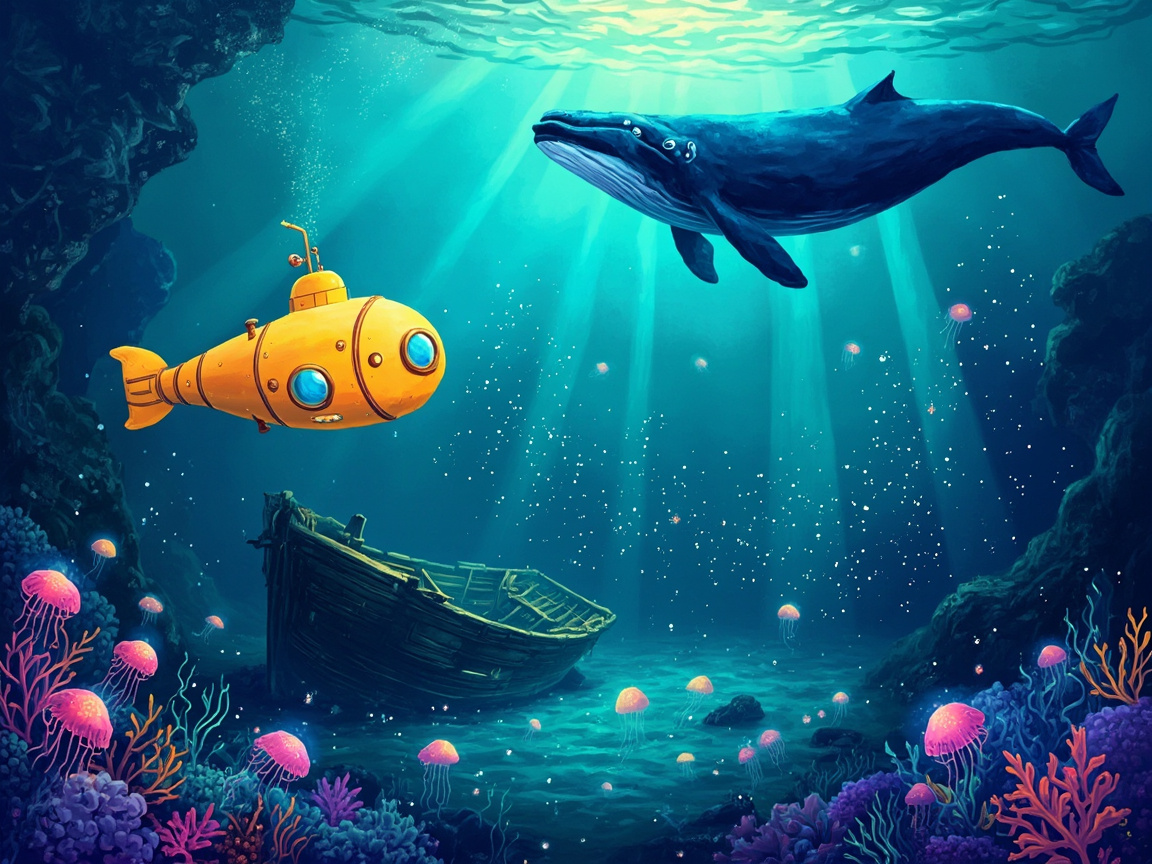
Quiz: Mysteries of the Deep
Test your knowledge of the ocean's deepest secrets, from glowing creatures to ghostly shipwrecks.
Into the Abyss
Beneath the sunlit surface of the ocean lies a world that humans have barely explored. The deepest parts of the sea are found in long, narrow valleys called trenches, where the seabed can plummet to nearly 11 kilometres below the waves. Because no sunlight reaches these depths, the creatures that live here have adapted in strange ways, often producing their own light through a process called bioluminescence. Scientists use specialised equipment, including unmanned submarines and sonar mapping, to study this abyss during risky but fascinating expeditions.
Stories from the Deep
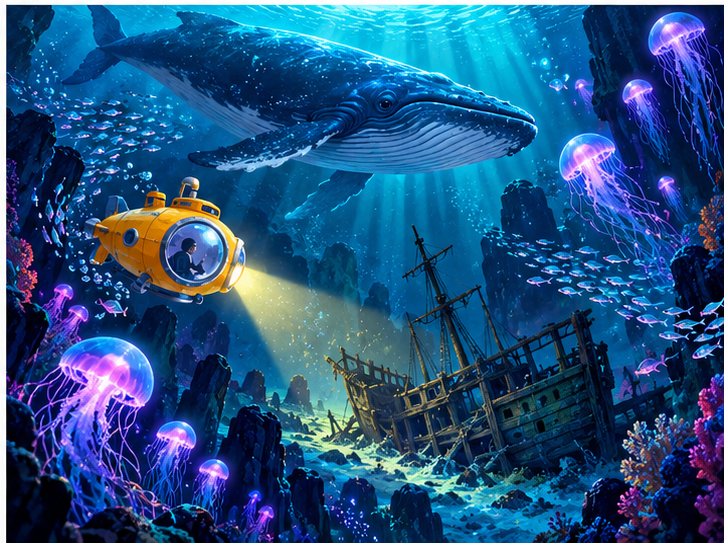
For centuries, the ocean has inspired both science and folklore, with sailors telling tales of giant sea creatures and haunted waters. The remains of lost ships, or vessels, lie scattered across the seafloor as wreckage, each one a frozen moment in history waiting to be discovered. Marine archaeologists study these underwater graveyards carefully, raising artefacts without damaging the site. Meanwhile, large whales continue to drift through the deep, their songs travelling for kilometres and adding to the mystery of what really lives in the dark water below.
Quiz
-
1According to the article, how deep can the deepest parts of the sea reach?
The article states that trenches can 'plummet to nearly 11 kilometres below the waves'.
-
2Which tools do scientists use to study the deep ocean, according to the passage?
The article mentions 'unmanned submarines and sonar mapping' as the equipment used to study the abyss.
-
3What does the word 'wreckage' refer to in the passage?
The article explains that wreckage comes from 'lost ships, or vessels' lying on the seafloor.
-
4Who studies the remains of ships on the ocean floor, according to the text?
The passage states that 'Marine archaeologists study these underwater graveyards carefully'.
-
5Why do many deep-sea creatures produce their own light?
The article explains that 'no sunlight reaches these depths', so creatures have adapted through bioluminescence.