
The Language of Negotiation
From leverage and bottom lines to horse trading and deal-sweetening, the words and idioms that turn difficult talks into agreements.
Opening the Conversation
Every negotiation begins with a careful assessment of what each side brings to the table. Before you speak, take stock of your leverage—the resources, alternatives, and information that strengthen your position. Equally important is knowing your bottom line, the absolute minimum or maximum you can accept without walking away. Skilled negotiators also look for common ground, those shared interests that can turn opponents into partners. Identifying what is genuinely non-negotiable for both sides helps prevent wasted time, especially when one party appears to hold the cards.
Making Concessions and Countermoves
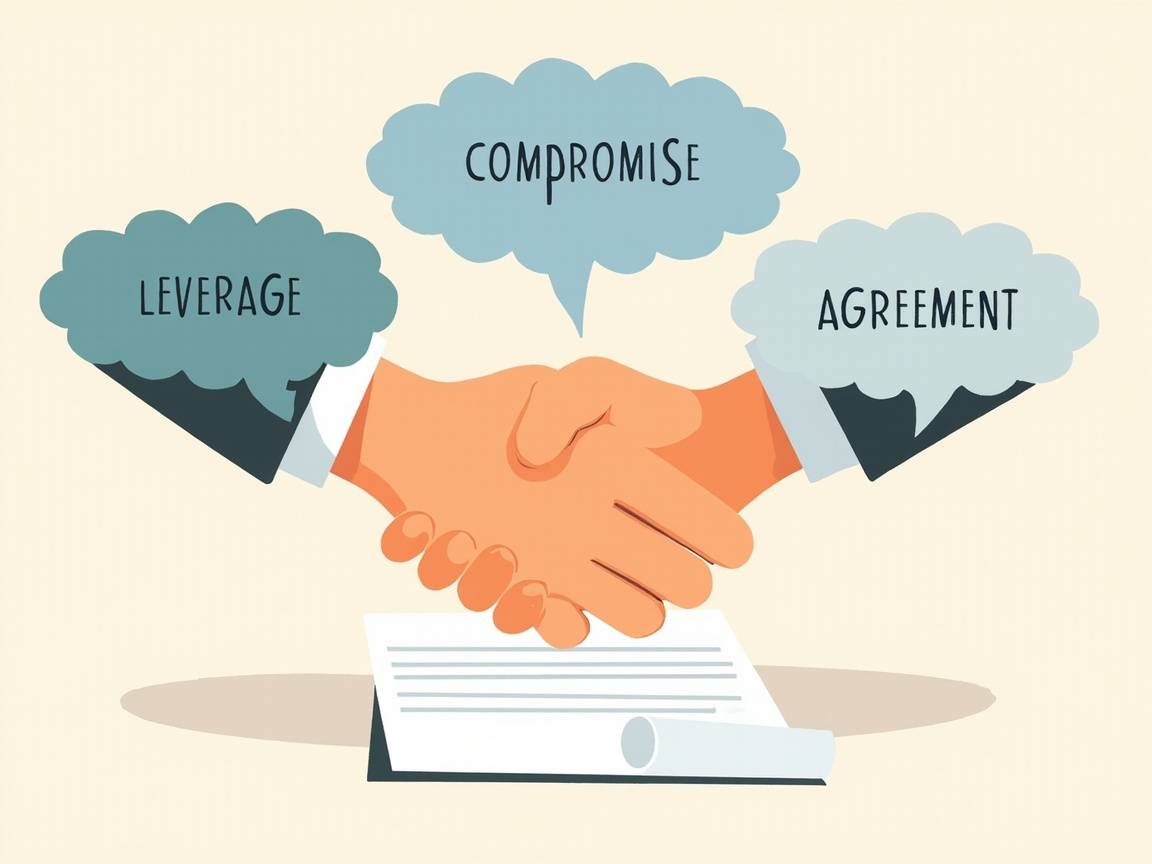
Successful negotiation is rarely about victory; it is about finding a path that both sides can live with. When tension rises, suggesting a compromise—inviting the other party to meet halfway—can break the spiral of demands. Intense horse trading often follows, with each side trading smaller gains for larger wins. If progress stalls, one party may try to sweeten the deal with an extra benefit, such as a discount, a bonus, or faster delivery. Beware of anyone who tries to lowball you with an offer that seems too generous, and watch closely to see if the other side will actually budge on their position.
Reaching an Agreement
When both sides feel heard, the moment often comes to table an offer—to put concrete terms on the table for serious review. A tough negotiator may then issue an ultimatum: take it or leave it, signalling that no further adjustments are coming. If neither party will move, a neutral mediator or a fresh idea can help break the deadlock and restart progress. Once terms are agreed, all that remains is to sign on the dotted line, transforming spoken words into a binding commitment. After you have laid out your case, the ball's in your court—the decision now rests with the other side.
When Talks Fall Through
Even the most promising discussions can collapse when one side crosses a red line—a boundary that simply cannot be crossed under any circumstances. Knowing when to walk away is itself a powerful skill, because staying too long at a bad deal often costs more than leaving. A failed negotiation is not the end of the story; it is usually an invitation to go back to the drawing board, armed with new information and a sharper understanding of the other side's true priorities. Smart professionals treat every breakdown as data, refining their approach before the next round of talks begins.
Quiz
-
1According to the article, what should a negotiator identify early in a discussion to avoid wasted time?
The article says identifying what is non-negotiable for both sides helps prevent wasted time.
-
2What does the idiom "horse trading" describe in the text?
The text defines horse trading as each side trading smaller gains for larger wins.
-
3If a negotiator says, "Take it or leave it," what are they communicating?
The article defines "take it or leave it" as signalling that no further adjustments are coming.
-
4Why is "walking away" described as a powerful skill?
The article states that staying too long at a bad deal often costs more than leaving.
-
5What does the article suggest doing when a negotiation breaks down?
A failed negotiation is described as an invitation to go back to the drawing board, armed with new information.